
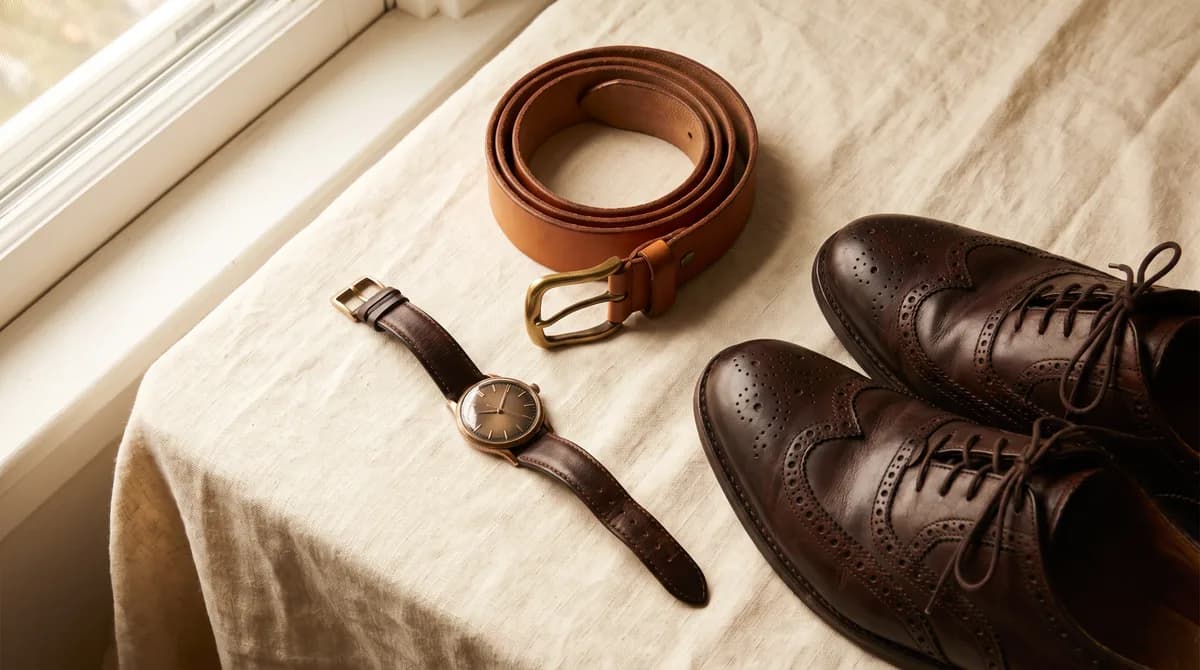
Most men either ignore accessories entirely or pile them on without a system. The result in both cases is the same: the outfit doesn't land the way it should. The fix is simpler than most style guides make it.
One rule: accessories reinforce, they don't compete
Every accessory you put on should support the outfit's dominant read, not fight for attention. A watch with a metal tone that matches your belt hardware is not a detail - it is the whole point. Accessories that clash do not make you look bold. They make you look like you got dressed in the dark.
- Match metal tones: if your belt has brass hardware, your watch should too
- Keep textures in the same family - leather with leather, metal with metal
- One focal point per outfit: watch OR necklace, not both
The three accessories that always work
A watch, a belt, and clean footwear. These three, done right, do more for how you look than a drawer full of rings and bracelets. Start here. Add only when these are locked.
- Watch: choose a case width proportional to your wrist (not larger than 42mm if your wrist is under 17cm)
- Belt: match leather color and finish to your shoes - always
- Footwear: clean soles, no scuffs - footwear in poor condition cancels everything above it
Your wardrobe can feel sharper.
Know your exact colors. Stop guessing what works.
How your color season changes the math
Metal tone is not neutral - it is part of your color story. Cool seasons (winter, summer) read better in silver, gunmetal, and white gold. Warm seasons (spring, autumn) read better in gold, bronze, and brass. Getting this right makes your accessories look intentional without requiring any effort.
- Cool-season men: silver, gunmetal, platinum - warm metals create visual noise
- Warm-season men: gold, bronze, brass - cool metals look borrowed
- When in doubt, gunmetal bridges both families better than bright silver